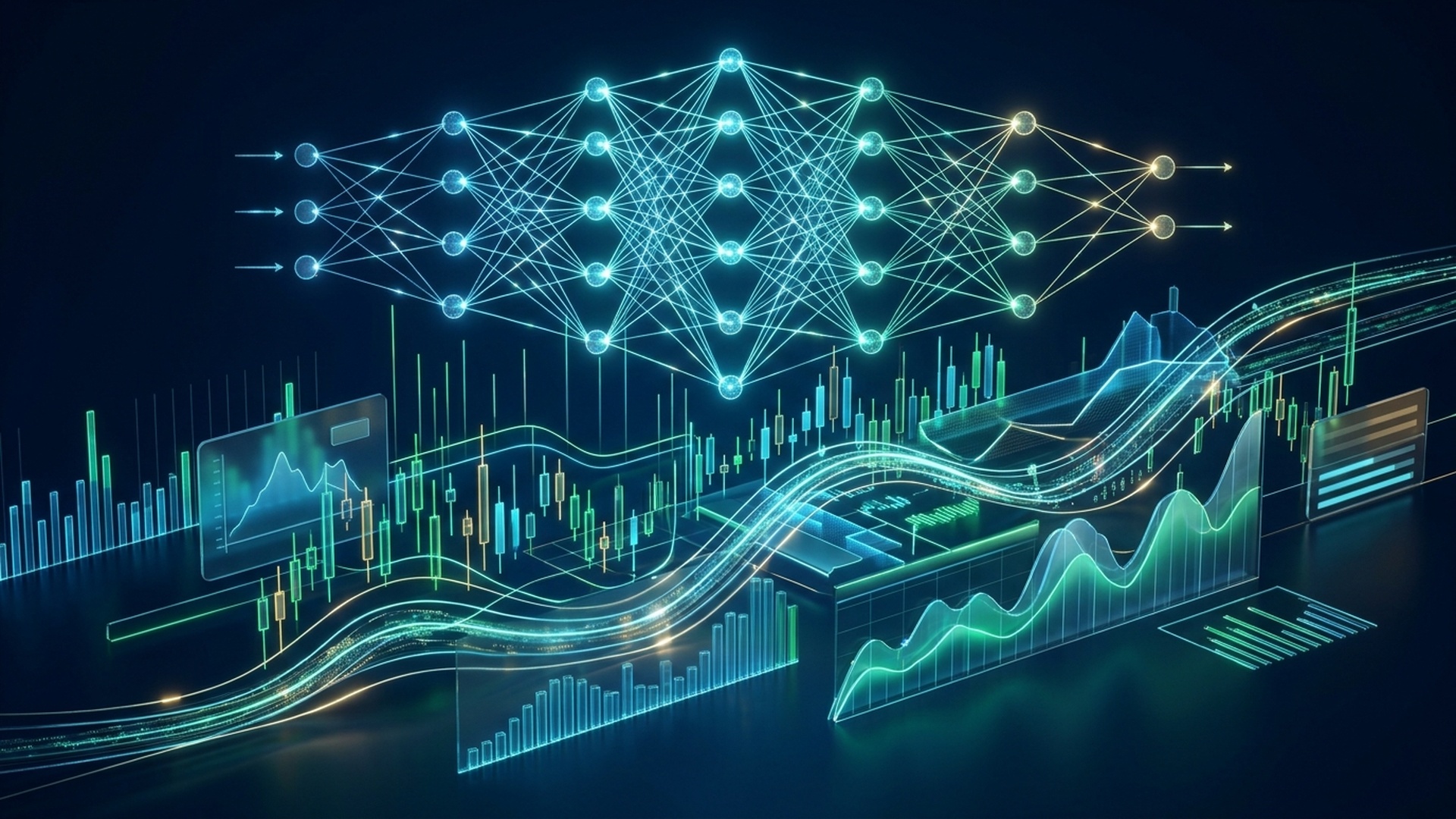
Deep Learning in Finance: Applications, Benefits, and Real-World Examples
Deep learning in finance is changing how banks, financial institutions, investment firms, and fintech companies analyze information, identify patterns, assess risk, and make data-driven decisions. By using artificial neural networks with multiple layers, financial organizations can process large volumes of structured and unstructured data to support tasks that are difficult to solve with traditional rule-based systems alone.
From identifying suspicious transactions to forecasting market trends, deep learning offers a range of applications across modern financial services. However, its effectiveness depends on data quality, appropriate model design, careful testing, regulatory compliance, and human oversight.
This guide explains how deep learning works in finance, where it is used, its advantages and limitations, and how students and aspiring professionals can begin exploring financial machine learning projects.
What Is Deep Learning in Finance?
Deep learning in finance refers to the use of multi-layer neural networks to analyze financial data, identify complex relationships, and generate predictions or classifications. These models learn patterns from historical examples rather than relying exclusively on manually written rules.
Financial data can include transaction records, account activity, company reports, economic indicators, market prices, news articles, and customer interactions. Different deep learning architectures are suited to different types of information.
- Feedforward neural networks: Analyze structured data for tasks such as risk scoring and financial classification.
- Recurrent neural networks (RNNs): Process sequences of information, although their use in many applications has been supplemented by newer architectures.
- Long Short-Term Memory (LSTM) networks: Learn temporal relationships in sequential data, such as historical financial observations.
- Transformers: Analyze sequences and contextual information, including financial documents, reports, and news.
- Autoencoders: Learn compressed representations of data and can support anomaly detection.
The best architecture depends on the business problem, available data, performance requirements, and the consequences of an incorrect prediction.
How Does Deep Learning Work in Financial Services?
A typical deep learning workflow begins with a clearly defined financial problem. Data is collected and prepared, a model is trained on historical examples, and its performance is evaluated using data that was not used for training. If the results are reliable enough for the intended purpose, the model may be integrated into a financial application with appropriate monitoring.
- Define the problem: Decide whether the objective is to identify suspicious transactions, estimate credit risk, classify documents, or forecast a financial metric.
- Collect relevant data: Obtain appropriate transaction records, market observations, reports, or other permitted data.
- Prepare the data: Address missing values, inconsistent formats, duplicates, outliers, and data leakage risks.
- Select a model: Choose an architecture that matches the data type and task.
- Train the model: Optimize model parameters using a training dataset.
- Evaluate performance: Test the model on unseen data using metrics suitable for the problem.
- Deploy and monitor: Track performance, data changes, operational reliability, and unintended outcomes.
For financial time-series data, chronological evaluation is especially important. Randomly splitting observations can allow information from the future to leak into training or testing and produce misleading results.
Major Applications of Deep Learning in Finance
1. Fraud Detection
Financial fraud detection involves identifying transactions or account behavior that may be suspicious. Deep learning models can learn patterns from historical transaction features and help prioritize unusual activity for further review.
For example, a model may identify a transaction sequence that differs significantly from a customer's usual spending behavior. The result can be combined with transaction rules, contextual information, and human review before an institution takes action.
Fraud detection models must balance missed fraud against false alarms. They also need to adapt to changing fraud patterns without unfairly penalizing legitimate customers.
2. Credit Risk Assessment
Credit risk assessment estimates the likelihood that a borrower will fail to meet repayment obligations. Deep learning can analyze complex relationships among permitted financial variables, repayment histories, and other relevant information.
These models may support credit risk analysis, but a more complex model is not automatically more accurate or fair than a traditional statistical model. Institutions must assess explainability, data quality, applicable lending laws, and the risk of discriminatory outcomes.
3. Algorithmic Trading Research
Deep learning can be used to study market data, investigate patterns in price and volume sequences, and test trading strategies. Models may also process text from financial news or company announcements to identify information relevant to a research hypothesis.
However, financial markets are noisy, competitive, and affected by unexpected events. A model that performs well on historical data may fail in live markets. Transaction costs, slippage, liquidity, changing market conditions, and overfitting must be considered before any strategy is used with real capital.
4. Financial Forecasting
Deep learning models can estimate future values of selected financial variables, such as demand, cash flow, revenue, or market indicators. Sequence models may help identify temporal patterns in historical observations.
Forecasts should be treated as estimates rather than guarantees. Financial outcomes can be affected by policy changes, economic shocks, company decisions, and other events that historical data may not capture.
5. Anti-Money Laundering Support
Financial institutions monitor transactions and relationships to identify activity that may warrant investigation. Deep learning can help rank unusual transaction patterns or analyze complex relationships when used alongside established monitoring systems.
A model's alert is not proof of illegal activity. Decisions require appropriate investigation, documented procedures, and compliance with applicable laws and reporting requirements.
6. Customer Service and Document Processing
Deep learning models, particularly language models, can assist with classifying customer messages, extracting information from financial documents, summarizing reports, and routing service requests.
Applications handling personal or financial information need strong access controls, privacy safeguards, accuracy checks, and human review for consequential decisions. Generated summaries should be checked against the original documents.
7. Portfolio Analysis and Risk Management
Deep learning may support research into asset relationships, volatility patterns, scenario analysis, and portfolio risk. It can help analysts examine complex datasets, but model outputs should be combined with established risk measures and an understanding of market conditions.
Historical correlations can change, and models can underestimate rare events. Financial professionals should test assumptions, stress-test portfolios, and avoid treating model outputs as a complete representation of risk.
Deep Learning Applications in Finance at a Glance
| Application | Typical input | Potential use | Important limitation |
|---|---|---|---|
| Fraud detection | Transaction features and account activity | Prioritize suspicious transactions | False positives and changing fraud patterns |
| Credit risk | Permitted borrower and repayment data | Support risk estimation | Bias, explainability, and regulatory requirements |
| Trading research | Market prices, volume, and financial text | Test predictive hypotheses | Overfitting and market uncertainty |
| Forecasting | Historical financial or economic series | Estimate future values | Unexpected events and changing patterns |
| Transaction monitoring | Transactions and relationship data | Identify activity for investigation | Alerts require contextual review |
| Document analysis | Reports, statements, and customer messages | Extract, classify, and summarize information | Errors, privacy risks, and unsupported outputs |
| Risk analysis | Asset returns and financial indicators | Support scenario and portfolio analysis | Model uncertainty and rare events |
Benefits of Deep Learning in Finance
- Pattern recognition: Neural networks can learn complex relationships that may be difficult to represent with manually specified rules.
- Automation support: Models can assist with repetitive classification, document processing, and prioritization tasks.
- Large-scale analysis: Properly designed systems can process substantial volumes of structured and unstructured information.
- Flexible data processing: Different architectures can work with numerical data, sequences, text, and other information formats.
- Decision support: Predictions can help analysts focus attention on cases requiring closer examination.
- Continuous evaluation: Monitoring systems can detect when performance changes and signal the need for investigation or retraining.
These benefits are possibilities rather than guarantees. Deep learning can require substantial computing resources, large datasets, specialized expertise, and ongoing maintenance.
Challenges and Risks of Deep Learning in Finance
Data Quality and Availability
Financial data may be incomplete, inconsistent, imbalanced, delayed, or subject to strict access restrictions. A model trained on poor-quality data may produce unreliable results even when its architecture is sophisticated.
Limited Explainability
Some deep learning models are difficult to interpret. This can be a concern when financial decisions need to be explained to customers, auditors, risk teams, or regulators. Explainability methods can provide useful evidence, but they do not automatically establish that a model is correct or fair.
Bias and Fairness
Historical data may reflect existing inequalities or past decision-making problems. Teams should evaluate model performance across relevant groups, document limitations, and ensure that data and decisions comply with applicable anti-discrimination rules.
Overfitting and Data Leakage
A model may memorize patterns in training data or accidentally use information unavailable at the time a prediction would be made. Chronological testing, careful feature engineering, realistic baselines, and out-of-sample evaluation help reduce these risks.
Privacy and Compliance
Financial records can contain sensitive personal information. Data processing must follow applicable privacy, financial-services, retention, and security requirements. Teams should minimize data collection, control access, and document how information is used.
Model Drift and Market Changes
Customer behavior, economic conditions, fraud patterns, and market relationships change over time. Monitoring and periodic reassessment are necessary to identify when a model's assumptions no longer hold.
Deep Learning vs. Traditional Machine Learning in Finance
| Factor | Traditional machine learning | Deep learning |
|---|---|---|
| Model approach | Algorithms such as logistic regression, decision trees, and gradient boosting | Neural networks with multiple layers |
| Feature engineering | Often relies more on manually designed features | Can learn useful representations from suitable raw or prepared data |
| Data requirements | Can perform well with smaller structured datasets, depending on the task | May benefit from larger datasets, particularly for complex tasks |
| Computing needs | Often lower for simpler models | Can be higher, especially for large neural networks |
| Interpretability | Varies by algorithm; some models are relatively easy to explain | Can be more difficult to interpret |
| Financial use cases | Risk scoring, classification, forecasting, and tabular prediction | Sequence modeling, text analysis, complex pattern recognition, and selected forecasting tasks |
Deep learning is not always the best choice. For structured financial data, simpler models can be faster, easier to validate, and competitive in predictive performance. Model selection should be based on evidence from a fair comparison rather than on complexity alone.
Tools and Technologies for Deep Learning in Finance
- Python: A widely used programming language for financial data analysis and machine learning.
- NumPy and pandas: Libraries for numerical operations and data preparation.
- Matplotlib: A tool for visualizing financial data, model results, and evaluation metrics.
- scikit-learn: Useful for preprocessing, baseline models, and evaluation workflows.
- TensorFlow and Keras: Frameworks for building and training neural networks.
- PyTorch: A deep learning framework for experimentation and model development.
- Jupyter Notebook: An interactive environment for documenting analysis and experiments.
- SQL: Useful for querying and organizing structured datasets.
Beginners should first learn Python, statistics, data preparation, and traditional machine learning before attempting complex financial neural networks. Public datasets and synthetic examples can provide a practical starting point without requiring access to confidential financial records.
Deep Learning in Finance Projects for Students
Students can demonstrate their understanding of financial analytics through projects that use public or synthetic datasets. Each project should explain its objective, data source, evaluation method, limitations, and responsible-use considerations.
Project 1: Transaction Anomaly Detection
Build an experimental model that identifies unusual patterns in a synthetic or appropriately licensed transaction dataset. An autoencoder can be trained to reconstruct typical transaction features, with reconstruction errors used as one signal for further review.
- Skills: Python, pandas, neural networks, anomaly detection, and data visualization.
- Evaluation: Precision, recall, false-positive rate, and precision-recall analysis where labels are available.
- Learning outcome: Understand why unusual behavior is not automatically evidence of fraud.
Project 2: Financial Time-Series Forecasting
Use a public historical time-series dataset to compare an LSTM model with simple baseline forecasts. Split the data chronologically and report errors on a later holdout period.
- Skills: Time-series preparation, sequence modeling, visualization, and evaluation.
- Evaluation: Mean absolute error or another metric appropriate to the target.
- Learning outcome: Understand forecasting uncertainty and the danger of relying on a single accuracy score.
Project 3: Financial News Sentiment Analysis
Create a text classification experiment that categorizes financial headlines as positive, negative, or neutral based on a clearly defined labeling method. Use a permitted dataset and compare a basic text model with a transformer-based approach if resources allow.
- Skills: Natural language processing, text preprocessing, model evaluation, and error analysis.
- Evaluation: Per-class precision, recall, F1-score, and a confusion matrix.
- Learning outcome: Recognize that headline sentiment does not reliably predict future investment returns.
Project 4: Credit Risk Classification
Use a suitable public educational dataset to compare a baseline classifier with a neural network for estimating a defined credit-risk outcome. Document the dataset's limitations and assess whether performance differs across relevant groups when the data permits.
- Skills: Classification, feature processing, model evaluation, and responsible AI.
- Evaluation: ROC-AUC alongside precision, recall, calibration, and fairness-related checks where appropriate.
- Learning outcome: Understand why an experimental model must not be treated as a real lending decision system without extensive validation and governance.
How to Start Learning Deep Learning for Finance
- Learn Python fundamentals: Practice variables, functions, data structures, file handling, and libraries.
- Study mathematics and statistics: Focus on probability, descriptive statistics, linear algebra, derivatives, and model evaluation.
- Practice financial data analysis: Learn to inspect datasets, calculate returns, handle missing observations, and visualize trends.
- Understand machine learning: Study classification, regression, train-test splitting, feature engineering, and overfitting.
- Learn neural networks: Explore layers, activation functions, loss functions, gradient descent, and regularization.
- Choose one financial problem: Start with forecasting, anomaly detection, or text classification rather than trying to build a complete financial platform.
- Compare against a baseline: Demonstrate whether the neural network offers a meaningful improvement over a simple approach.
- Document the results: Include methodology, metrics, assumptions, limitations, and steps for reproducibility.
A learner in Ludhiana or elsewhere in Punjab can follow this roadmap using a computer, Python, free educational resources, and public datasets. Access to expensive financial platforms is not necessary for a first educational project.
Career Opportunities Related to Deep Learning in Finance
Skills at the intersection of machine learning and financial services may be relevant to several technical career paths. The actual requirements vary by employer and role.
- Machine Learning Engineer: Develops, evaluates, and maintains machine learning systems.
- Data Scientist: Analyzes data, builds predictive models, and communicates findings.
- Quantitative Researcher: Studies mathematical and statistical methods for financial problems; many roles require strong mathematics and domain expertise.
- Financial Data Analyst: Prepares and interprets financial datasets and communicates analytical results.
- AI Engineer: Builds AI-enabled applications and integrates models into software systems.
- Risk Analytics Professional: Supports the measurement, analysis, and monitoring of financial risk.
Useful preparation includes Python, statistics, SQL, machine learning, neural networks, data visualization, software development practices, and an understanding of financial concepts. A project portfolio that explains evaluation and limitations can help demonstrate practical skills.
Responsible Use of Deep Learning in Finance
Financial predictions can influence access to credit, customer treatment, compliance investigations, and investment decisions. A responsible system should therefore be designed around more than predictive performance.
- Use data that is lawfully obtained and appropriate for the intended task.
- Keep training, validation, and test data separate and prevent information leakage.
- Compare deep learning with simpler, interpretable baselines.
- Assess false positives, false negatives, calibration, and relevant fairness concerns.
- Document assumptions, limitations, intended use, and model versions.
- Monitor changing data and model performance after deployment.
- Require suitable human oversight for consequential financial decisions.
- Follow applicable privacy, consumer protection, lending, financial-services, and recordkeeping requirements.
Frequently Asked Questions
What is deep learning in finance?
Deep learning in finance uses multi-layer neural networks to analyze financial data and support tasks such as anomaly detection, risk assessment, forecasting, document analysis, and financial text processing.
How is deep learning used in banking?
Banks may use deep learning to support transaction monitoring, customer-service automation, document processing, risk analysis, and the prioritization of suspicious activity. Each application requires appropriate validation and controls.
Can deep learning predict stock prices accurately?
Deep learning can be used to study historical market data and test forecasting hypotheses, but consistently predicting stock prices is difficult. Markets are noisy and affected by unpredictable events, and strong historical results do not guarantee future performance.
Is deep learning better than traditional machine learning for finance?
Not always. Deep learning can be useful for complex sequences and unstructured data, while traditional machine learning may perform as well or better on many structured financial datasets with less computation and greater interpretability.
Which programming language is best for deep learning in finance?
Python is a practical starting point because it has widely used data analysis and deep learning libraries, including pandas, NumPy, scikit-learn, TensorFlow, and PyTorch.
Can beginners build a deep learning finance project?
Yes. Beginners can start with a public time-series dataset, synthetic transactions, or a financial text dataset. They should learn basic Python and machine learning first and evaluate results against a simple baseline.
What are the main risks of deep learning in finance?
Important risks include poor data quality, overfitting, data leakage, model drift, limited explainability, privacy violations, biased outcomes, and overreliance on predictions.
Does deep learning replace financial analysts?
Deep learning can automate or support some analytical tasks, but financial work also requires judgment, domain knowledge, communication, governance, and responsibility for decisions. Its role depends on the organization and application.
What skills are needed for deep learning in finance?
Useful skills include Python, probability, statistics, linear algebra, data analysis, machine learning, neural networks, time-series analysis, model evaluation, and foundational financial knowledge.
Can I learn deep learning in finance in Ludhiana?
You can begin learning from Ludhiana through online documentation, educational courses, Python practice, and public datasets. Enrolling in a comprehensive deep learning course in Ludhiana offers hands-on training with neural network architectures, PyTorch, TensorFlow, sequence modeling, and time-series analytics under experienced instructors. Focus on building a small, well-documented project and understanding its limitations before pursuing advanced financial applications.
Conclusion
Deep learning in finance provides methods for analyzing complex data and supporting tasks such as fraud detection, credit risk assessment, forecasting, transaction monitoring, and financial document processing. Its value depends on choosing the right problem, preparing reliable data, comparing suitable models, and evaluating outcomes under realistic conditions.
For students and aspiring professionals, a practical starting point is to learn Python and statistics, build a small project using public or synthetic data, and document the results honestly. Combining technical skills with financial knowledge, responsible data practices, and critical evaluation is essential for applying deep learning effectively in financial services.