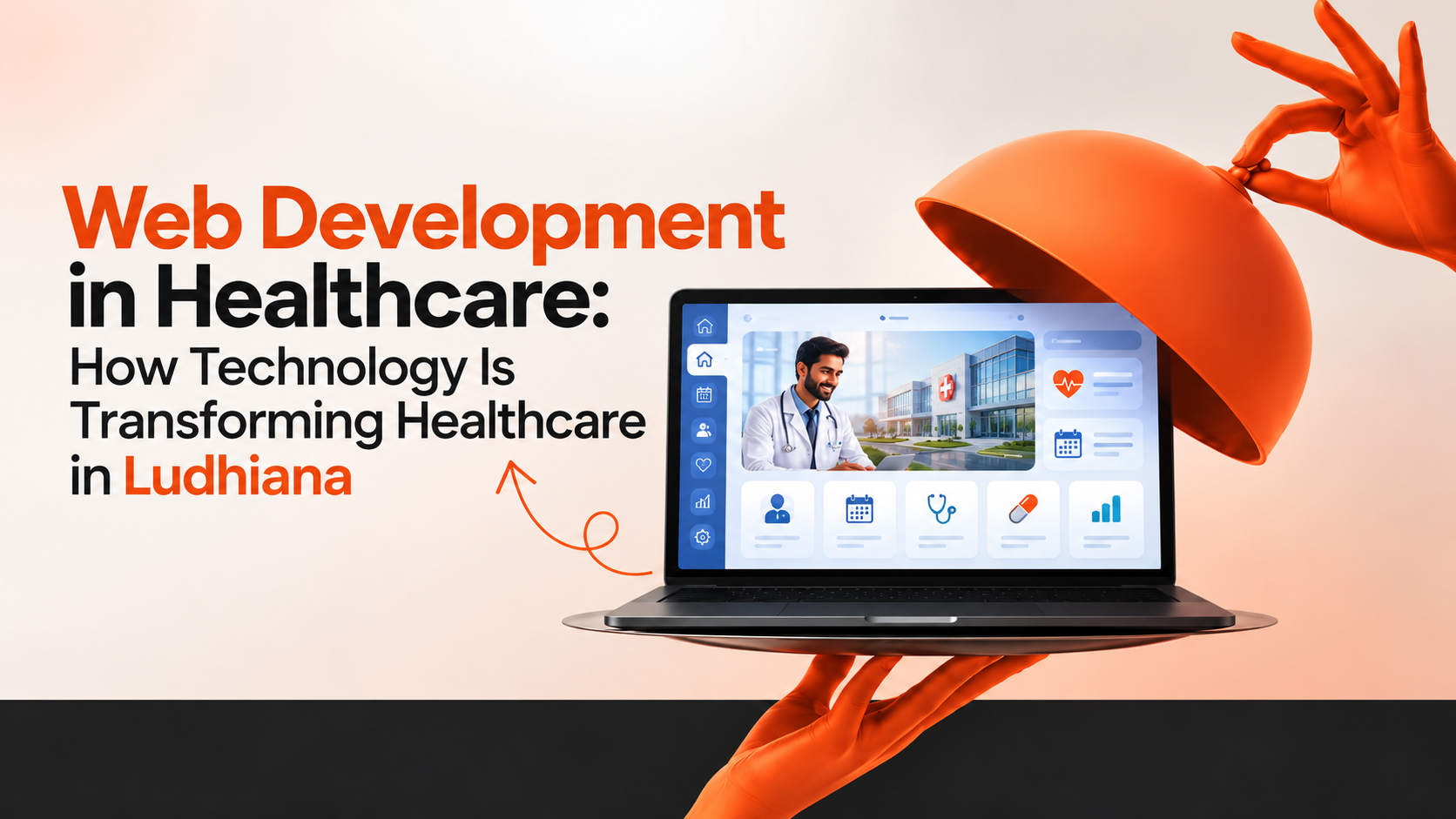
Web Development in Healthcare
Healthcare has changed a lot in the last few years. A patient who once had to visit a hospital just to book an appointment can now often do it through a website or mobile-friendly platform. Doctors can share information online, diagnostic centres can provide reports digitally, and patients can find healthcare services without making multiple phone calls.
Behind many of these services is web development.
Web development in healthcare means creating websites and web-based applications that help hospitals, clinics, doctors, diagnostic centres, pharmacies, and patients communicate and manage information more efficiently. It is not limited to designing a good-looking healthcare website. A properly developed healthcare platform can support appointment booking, patient registration, online consultations, medical information, reports, payments, and much more.
For students interested in technology, this makes healthcare an interesting area to explore because it combines web development skills with a real-world industry need.
What Does Web Development Mean in Healthcare?
At a basic level, healthcare web development involves building digital platforms that make healthcare services easier to access and manage.
Consider a simple example.
Suppose someone in Ludhiana wants to consult a dermatologist. Instead of visiting several clinics personally, they may search online, check the doctor's available services, view appointment information, and submit a booking request through a website.
From the patient's side, this may look like a simple form. But behind that form, developers may have created:
A user interface for patients
A database for storing appointment information
Login and authentication systems
Doctor and clinic profiles
Appointment scheduling functionality
Notification systems
Administrative dashboards
Secure data handling
This is where web development becomes much more than simply creating web pages.
Why Do Healthcare Organizations Need Websites?
A healthcare website is often the first digital interaction a patient has with a hospital, clinic, or healthcare professional.
A well-structured website can help visitors quickly find essential information such as services, doctor profiles, consultation timings, locations, contact details, and appointment options.
For a local healthcare provider in Ludhiana, this can also improve online accessibility. Someone searching for a particular healthcare service can discover relevant information before deciding whether to contact or visit the provider.
However, healthcare websites have a responsibility that many ordinary websites do not. The information presented should be clear and reliable, and systems handling patient information need appropriate security and privacy protections.
Common Healthcare Web Development Applications
There are several ways web development is used across the healthcare sector.
1. Hospital Websites
Hospital websites can provide information about departments, doctors, facilities, services, visiting hours, contact details, and appointment procedures.
2. Doctor Appointment Platforms
These systems allow patients to view available doctors or services and request or schedule appointments online.
3. Patient Portals
Patient portals can give registered users access to certain healthcare-related information, appointments, reports, prescriptions, or communication features, depending on the organization and system.
4. Telemedicine Platforms
Web-based healthcare applications can support remote consultations, allowing patients and healthcare professionals to communicate without requiring a physical visit for every interaction.
5. Diagnostic Centre Websites
Diagnostic centres can use websites to explain available tests, provide booking options, and, where appropriate, allow patients to access reports digitally.
The Technology Behind Healthcare Websites
Students learning web development may already be familiar with technologies such as HTML, CSS and JavaScript. These form an important foundation for building the front end of many websites.
HTML structures the content. CSS controls presentation and layout. JavaScript adds interactive behaviour.
But a healthcare application can require much more.
A developer may use a backend technology such as Python, Java, PHP, Node.js, or another server-side technology to process requests and communicate with databases.
Databases can store information such as user accounts, appointment records, doctor profiles, or other application data, depending on the system's design and privacy requirements.
For larger applications, developers may also work with APIs, cloud infrastructure, authentication systems, testing tools, version control, and security technologies.
This is why healthcare web development can become a practical learning path for students who want to understand how different parts of modern software work together.
What Makes Healthcare Web Development Different?
The biggest difference is the sensitivity of healthcare information.
A normal website may store newsletter subscriptions or product enquiries. A healthcare platform can potentially deal with highly sensitive personal and medical information.
That means developers need to think carefully about authentication, authorization, encryption, secure data transmission, input validation, access controls, backups, and other security practices.
A healthcare developer should also think from the patient's perspective.
Imagine an elderly patient trying to book an appointment on a complicated website. Even if the technology works perfectly, the experience is poor if the user cannot understand where to click.
So healthcare web development is not only about writing code. It is also about usability, accessibility, reliability, privacy, and trust.
Why This Field Is Interesting for Web Development Students
Students often learn web development by creating basic projects such as portfolios, blogs, calculators, or e-commerce pages. These projects are useful for understanding fundamentals, but real industries provide opportunities to solve more meaningful problems.
A healthcare project can introduce students to practical requirements such as user roles, secure login systems, databases, appointment workflows, dashboards, APIs, and responsive design.
For example, a student project could involve creating a fictional clinic appointment system where patients register, select a doctor, choose an available time slot, and receive an appointment confirmation.
The project does not need to handle real patient information. A fictional dataset can be used to learn the technical concepts safely.
How Web Development Is Changing Healthcare
The role of web development in healthcare goes beyond putting hospital information on a website. Modern healthcare platforms are increasingly designed around the actual needs of patients, doctors, administrators, and healthcare organizations.
For someone in Ludhiana, this can be especially useful when looking for a nearby doctor, checking available services, booking an appointment, or accessing information before visiting a healthcare facility.
Online Appointment Booking
One of the most familiar uses of healthcare web development is online appointment scheduling.
Instead of calling a clinic during working hours, a patient can visit its website, select a department or doctor, choose an available time slot, and submit an appointment request.
Behind this apparently simple process, several components work together. The website needs to display available slots, collect patient details, store the appointment in a database, and prevent conflicting bookings.
For developers, this is a practical example of how front-end development, backend programming, databases, and business logic work together.
Patient Portals and Digital Access
Patient portals can provide a centralized place where users access selected healthcare services and information.
Depending on the healthcare organization, a portal might allow patients to view appointments, receive communications, access reports, or manage parts of their profile.
A good portal should not make users search through complicated menus. Important actions should be easy to identify, particularly because healthcare users can include people with very different levels of technical experience.
This makes user experience (UX) an important part of healthcare web development.
Telemedicine and Online Consultation
Telemedicine has also increased interest in web-based healthcare platforms.
A telemedicine system may provide features such as patient registration, appointment scheduling, online communication, video consultation integration, and digital payment functionality.
However, simply adding a video-call feature does not automatically create a complete telemedicine solution. The platform needs appropriate authentication, privacy protections, reliable communication, and a carefully designed user experience.
For developers, this shows how web development can connect with APIs, cloud services, databases, authentication systems, and communication technologies.
Healthcare Websites Need Strong Security
Security is one of the most important areas for anyone developing healthcare applications.
Imagine a website where users can create accounts and access personal healthcare information. If authentication is poorly implemented, unauthorized users could potentially gain access to information they should never see.
Developers therefore need to understand concepts such as:
Secure authentication
Authorization and user roles
Password protection
HTTPS and secure communication
Input validation
Protection against common web vulnerabilities
Secure database practices
Session management
Regular security testing and updates
The exact legal and technical requirements depend on the country, organization, system, and type of information being handled. Developers should therefore follow applicable healthcare, privacy, and cybersecurity requirements rather than assuming that one security checklist applies everywhere.
Accessibility Matters in Healthcare
A healthcare website should be usable by as many people as reasonably possible.
Consider a patient with poor eyesight, limited mobility, or difficulty using small buttons on a phone. A website with tiny text, confusing navigation, or low-contrast elements can create unnecessary barriers.
Accessible web development considers factors such as readable typography, sufficient contrast, keyboard navigation, meaningful labels, alternative text for relevant images, and logical page structures.
Accessibility is not simply a design trend. In healthcare, it can directly affect how easily people find and understand important information.
Responsive Design Is Essential
Many people access websites through smartphones rather than desktop computers.
A healthcare website therefore needs to work properly across different screen sizes.
A patient searching for a clinic in Ludhiana might be standing outside, travelling, or using a phone with a limited screen. If the appointment button is difficult to find or the page does not load properly, the user may leave the website.
Responsive design helps ensure that content, navigation, forms, buttons, and other interface elements adapt appropriately to different devices.
For web development students, responsive design is one of the fundamental skills worth mastering before moving into more specialized applications.
The Role of APIs in Healthcare Platforms
Modern web applications rarely work in isolation.
An API, or Application Programming Interface, allows different software systems to communicate with each other.
For example, a healthcare application might connect with a payment service, email notification system, map service, authentication provider, or another authorized software platform through APIs.
A developer does not necessarily build every service from scratch. Instead, they learn how to integrate reliable external services into their application while handling authentication, errors, data validation, and security appropriately.
Learning API integration can therefore be a valuable step for students who want to move beyond basic websites.
Artificial Intelligence and Healthcare Websites
Artificial intelligence is also becoming part of discussions around healthcare technology.
Web applications can potentially integrate AI-powered features such as conversational interfaces, document processing, search assistance, administrative automation, or information organization.
But healthcare is a sensitive environment, so developers need to be particularly careful about accuracy, privacy, transparency, and the limitations of AI-generated information.
An AI chatbot on a healthcare website, for example, should not casually present itself as a replacement for a qualified medical professional. The system's purpose, limitations, and escalation process need to be clearly defined.
This creates an interesting learning opportunity for students who are studying both web development and AI.
Career Opportunities for Web Developers in Healthcare
Healthcare organizations need many different technology roles, and web development can be one part of this ecosystem.
A student with strong web development fundamentals can explore roles related to:
Front-end development
Back-end development
Full-stack development
Healthcare application development
UI/UX development
API integration
Database development
Web application testing
Cloud-based application development
Healthcare technology products
The exact job requirements vary between organizations. Some positions may also expect knowledge of cybersecurity, cloud platforms, databases, software testing, or industry-specific systems.
For students in Ludhiana, building practical projects can be a useful way to understand these requirements before applying for internships or entry-level roles.
A Practical Project Idea for Students
If you are learning web development and want to build something connected to healthcare, consider creating a fictional clinic management website.
You could include a homepage, doctor profiles, service pages, appointment booking, patient registration, login functionality, an admin dashboard, and a simple database.
Start with HTML, CSS, and JavaScript. Then gradually introduce backend programming and database integration.
The objective should not be to create a real medical system. Instead, use fictional data and focus on learning how the different technical components connect.
Building a Career in Healthcare Web Development
Learning web development for healthcare does not mean that a student has to become a medical professional. The developer's role is to build and maintain the technology that helps healthcare organizations deliver digital services.
That distinction is useful for students who are interested in technology but may not have a background in biology or medicine.
A student can begin with the same web development fundamentals used for other industries and gradually learn how those skills apply to healthcare-specific requirements.
What Should Students Learn First?
If you are starting from zero, there is no need to jump directly into complex healthcare applications.
Begin with the fundamentals.
HTML helps you understand how web pages are structured. CSS teaches you how to design and arrange those pages. JavaScript introduces programming logic and interactive functionality.
Once these foundations become comfortable, you can move toward a backend technology, databases, APIs, authentication, Git, testing, and deployment.
A possible learning path could look like this:
HTML → CSS → JavaScript → Responsive Design → Git & GitHub → Backend Development → Databases → APIs → Authentication → Deployment → Security
After gaining these skills, you can start exploring industry-specific projects such as healthcare appointment systems or clinic management applications.
The important thing is not to rush through every technology. Understanding how and why each component is used is much more valuable than simply collecting a long list of tools.
Do You Need a Medical Background?
For learning web development, a medical degree is generally not required.
A developer can learn the technical side of building websites and applications while gradually understanding healthcare terminology, workflows, privacy requirements, and user needs.
However, when working on real healthcare systems, developers may need to collaborate closely with doctors, administrators, cybersecurity professionals, legal or compliance teams, and other specialists.
This is because developers should not independently decide how sensitive medical information should be collected, interpreted, or used.
For students, the takeaway is simple: you can start with technology and build domain knowledge over time.
Common Mistakes Beginners Should Avoid
One common mistake is focusing entirely on visual design while ignoring functionality.
A healthcare website may look attractive, but if users cannot easily book an appointment or find essential information, the design has not solved the actual problem.
Another mistake is treating security as something to learn later.
For a simple student portfolio, security may seem less complicated. But once an application handles accounts or sensitive information, security becomes part of the development process from the beginning.
Students should also avoid copying healthcare projects from tutorials without understanding them. A project becomes much more valuable when you can explain why you selected a particular database, how authentication works, how data moves between the frontend and backend, and what security considerations you made.
Building a Healthcare Project for Your Portfolio
A well-planned healthcare project can demonstrate several skills at once.
For example, imagine creating a fictional Ludhiana Clinic Appointment Portal.
The website could contain:
A responsive homepage
Doctor and department sections
Service information
Appointment booking
User registration and login
Admin dashboard
Appointment management
Database integration
Email notifications
Search functionality
You could also create different user roles. A patient might be able to book an appointment, while an administrator could manage appointments.
This type of project gives students an opportunity to demonstrate frontend development, backend programming, database management, authentication, responsive design, and application logic in one portfolio project.
Again, fictional information should be used for educational projects rather than real patient data.
Why Local Healthcare Businesses Can Benefit
Healthcare providers in cities such as Ludhiana serve people who increasingly use search engines and websites before making decisions.
A clinic's digital presence can provide information about its services, doctors, location, timings, and appointment process.
For healthcare organizations, web development can therefore support both patient convenience and digital accessibility.
For developers, this creates opportunities to work on websites and applications designed around real business and user requirements rather than generic practice pages.
What Does the Future Look Like?
Healthcare technology is likely to continue combining web development with areas such as cloud computing, artificial intelligence, data analytics, cybersecurity, automation, and mobile technology.
This does not mean every healthcare website will suddenly become an AI platform. Different organizations have different requirements.
Instead, the broader trend is toward connected digital systems where users can access services more conveniently while organizations manage information and workflows more efficiently.
For aspiring developers, this means that learning only how to create static web pages may not be enough for long-term growth. Understanding databases, APIs, security, cloud platforms, version control, and modern application development can make your technical foundation much stronger.
Final Thoughts
Web development in healthcare is ultimately about solving real problems through technology.
A patient wants an easier way to find information. A clinic may need a better appointment system. A hospital may need a secure patient portal. A diagnostic centre may want to provide reports digitally. Developers help turn these requirements into usable web-based solutions.
For students in Ludhiana, healthcare can also be an interesting domain for practical web development projects. You do not need to begin with a complicated application. Start with the basics, build small projects, understand how each technology works, and gradually take on more complex requirements.
If you are considering a career in web development, the most useful question is not simply “Which programming language should I learn?”
A better question is:
“What real problem can I solve with the skills I am learning?”